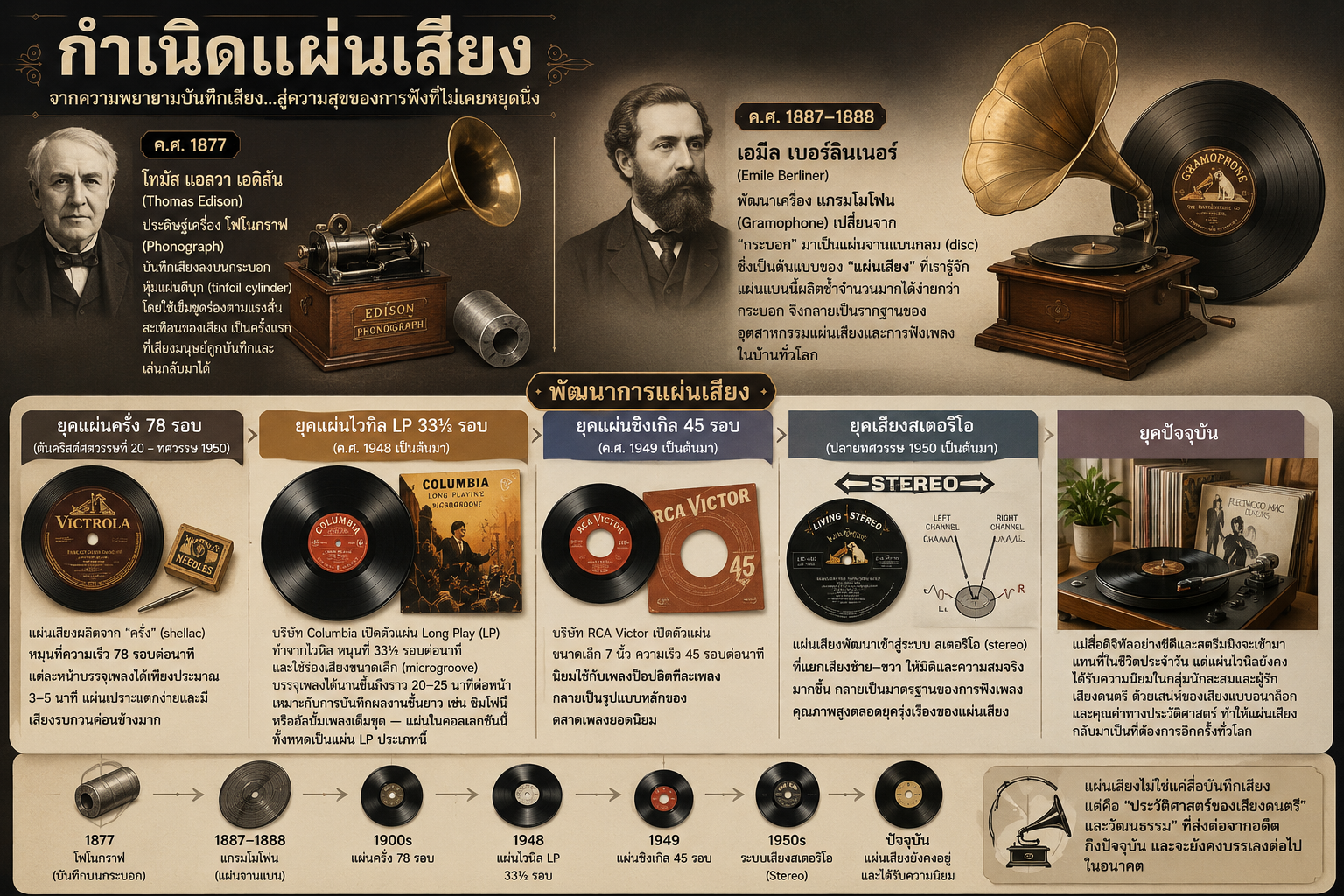
ในโลกปัจจุบัน การฟังเพลงเป็นเรื่องง่ายเพียงปลายนิ้วสัมผัส ผ่านบริการสตรีมมิงที่เปิดโอกาสให้ผู้ฟังเข้าถึงบทเพลงนับล้านได้ทุกที่ทุกเวลา แม้เทคโนโลยีดิจิทัลจะเข้ามาเปลี่ยนแปลงวิถีการบริโภคดนตรีอย่างสิ้นเชิง แต่ “แผ่นเสียง” (Vinyl Record) กลับไม่ได้เลือนหายไปตามกาลเวลา หากยังคงได้รับความนิยมจากนักสะสม นักฟังเพลง และคนรุ่นใหม่ที่หลงใหลในเสน่ห์ของการฟังเพลงผ่านสื่อแอนะล็อก
Today, listening to music is as effortless as a single touch through streaming platforms which allow listeners to access millions of tracks anywhere, anytime. Although digital technology has completely changed music consumption patterns, “Vinyl Record” has defied the passage of time. Rather, it continues to be cherished by collectors, audiophiles, and a new generation of listeners captivated by the charm of analog sound.
แผ่นเสียงจึงไม่ได้เป็นเพียงสื่อบันทึกเสียง หากยังสะท้อนพัฒนาการของเทคโนโลยี วิถีชีวิต วัฒนธรรม และความสัมพันธ์ระหว่างผู้คนกับดนตรีตลอดเวลากว่าหนึ่งศตวรรษ
Record isn't just a medium, it reflects the advancement of technology, lifestyle, culture, and the relationship between people and music for over a century.
จุดเริ่มต้นของการบันทึกเสียงThe Beginning of Sound Recording
ก่อนการกำเนิดเทคโนโลยีบันทึกเสียง มนุษย์สามารถรับฟังดนตรีได้จากการแสดงสดเท่านั้น ไม่ว่าจะเป็นการขับร้องหรือการบรรเลงด้วยเครื่องดนตรี ความพยายามในการ “เก็บรักษาเสียง” จึงเป็นความท้าทายสำคัญของนักประดิษฐ์ในช่วงการปฏิวัติอุตสาหกรรม
Before the invention of sound recording technology, humans could only listen to music through live performances, whether vocal or instrumental. The attempt to preserve sound therefore became the new challenge for inventors in the Industrial Revolution period.
ความก้าวหน้าครั้งแรกเริ่มจากการสร้างเครื่องมือที่สามารถบันทึกลักษณะของคลื่นเสียงลงบนพื้นผิววัสดุ แม้จะยังไม่สามารถนำเสียงกลับมาเล่นซ้ำได้ แต่ถือเป็นจุดเริ่มต้นของศาสตร์ด้านการบันทึกเสียง ต่อมาจึงมีการพัฒนาเครื่องบันทึกเสียงที่สามารถทั้งบันทึกและเล่นเสียงกลับได้ โดยใช้วัตถุทรงกระบอกเป็นสื่อบันทึก ซึ่งนับเป็นครั้งแรกที่มนุษย์สามารถเก็บรักษาเสียงไว้ฟังในภายหลัง
The first breakthrough began with the invention of a device that could record sound waves onto material surfaces. Although unable to reproduce the sound by itself, the device marked the beginning of sound recording technology. Subsequently, the earliest sound recording devices had developed to record and reproduce sound through phonograph cylinders. This milestone allowed the “preservation” of sound for the first time.
แม้กระบอกเสียงจะเป็นนวัตกรรมที่สำคัญ แต่ก็มีข้อจำกัดหลายประการ ทั้งด้านคุณภาพเสียง ความทนทาน และการผลิตซ้ำในปริมาณมาก ส่งผลให้เกิดการค้นคว้าเทคโนโลยีรูปแบบใหม่ที่มีประสิทธิภาพยิ่งกว่า
While phonograph cylinders were a groundbreaking innovation, they had many limitations, including sound quality, durability, and mass reproduction, therefore leading to the pursuit of more practical technologies.
กำเนิดแผ่นเสียงThe Birth of the Gramophone Record
ปลายคริสต์ศตวรรษที่ 19 นักประดิษฐ์ชาวเยอรมัน เอมิล เบอร์ลิเนอร์ (Emile Berliner) ได้พัฒนาเครื่องเล่นแผ่นเสียง (Gramophone) ซึ่งเปลี่ยนสื่อบันทึกจากวัตถุทรงกระบอกมาเป็น “แผ่นกลม” ที่หมุนในแนวนอน นวัตกรรมนี้กลายเป็นจุดเปลี่ยนสำคัญของอุตสาหกรรมดนตรี เนื่องจากสามารถผลิตสำเนาแผ่นเสียงจากต้นแบบเดียวกันได้จำนวนมาก ทำให้ต้นทุนลดลงและเผยแพร่ดนตรีสู่ผู้ฟังได้อย่างกว้างขวาง
In the late 19th century, a German inventor named “Emile Berliner” had developed the Gramophone, which shifted the recording medium from phonograph cylinders to flat circular discs that rotated horizontally. This innovation became a major turning point for the music industry. As countless copies could be mass-produced from a single master, production costs were significantly reduced, providing convenience and accessibility to music.
ในระยะแรก แผ่นเสียงผลิตจากวัสดุหลายชนิด ก่อนจะพัฒนาเป็นแผ่นครั่ง (Shellac Record) ซึ่งได้รับความนิยมอย่างต่อเนื่องหลายทศวรรษ แม้จะให้คุณภาพเสียงที่ดีขึ้นกว่าเดิม แต่ยังมีข้อจำกัดด้านความเปราะบาง น้ำหนัก และระยะเวลาการบันทึก
In early stages, records were manufactured from various materials before the invention of shellac records, which remained popular for several decades. Although shellac records offered improved sound quality, they are hindered by their fragility, heaviness, and short recording times.
จากแผ่นครั่งสู่แผ่นไวนิลEvolution from Shellac to Vinyl
หลังสงครามโลกครั้งที่สอง อุตสาหกรรมดนตรีได้พัฒนาวัสดุชนิดใหม่ คือ พอลิไวนิลคลอไรด์ (Polyvinyl Chloride: PVC) หรือที่นิยมเรียกว่า “ไวนิล” (Vinyl) ซึ่งมีคุณสมบัติยืดหยุ่น แข็งแรง น้ำหนักเบา และให้คุณภาพเสียงที่ดีกว่าแผ่นครั่ง
After World War II, a new material emerged: polyvinyl chloride (PVC), commonly known as “Vinyl.” It was flexible, durable, lightweight, and offered better sound quality than shellac.
ในช่วงเวลาเดียวกันบริษัทผู้ผลิตแผ่นเสียงได้พัฒนารูปแบบของแผ่นเสียงให้เหมาะกับการใช้งานที่แตกต่างกัน จนกลายเป็นมาตรฐานที่ใช้มาจนถึงปัจจุบัน ได้แก่
At the same time, vinyl record manufacturers developed different formats to suit various uses, which became standards and are still in use today:
- Long Play (LP) ความเร็ว 33⅓ รอบต่อนาที สำหรับบันทึกเพลงทั้งอัลบั้ม Long Play (LP) — 33⅓ RPM, used for recording full albums
- Single ความเร็ว 45 รอบต่อนาที สำหรับบันทึกเพลงเดี่ยวหรือเพลงฮิตจำนวน 1–2 เพลง Single — 45 RPM, used for recording one or two hit songs
ต่อมาเทคโนโลยีการบันทึกเสียงแบบสเตอริโอได้เข้ามายกระดับประสบการณ์การฟัง ให้ผู้ฟังรับรู้มิติของเสียงที่สมจริงยิ่งขึ้น ส่งผลให้แผ่นเสียงกลายเป็นสื่อหลักของการฟังดนตรีภายในบ้าน และเป็นศูนย์กลางของอุตสาหกรรมเพลงทั่วโลกตลอดหลายทศวรรษ
Later, stereo recording technology elevated the listening experience, providing listeners a more realistic sense of sound dimension. As a result, records became the primary medium for “music at home” and the center of the global music industry for decades.
ความเปลี่ยนแปลงของโลกดนตรีLeft Behind in Time?
นับตั้งแต่ช่วงปลายคริสต์ศตวรรษที่ 20 เป็นต้นมา การถือกำเนิดของเทปคาสเซ็ต แผ่นซีดี ไฟล์ดิจิทัล และการฟังเพลงผ่านอินเทอร์เน็ต ได้เปลี่ยนพฤติกรรมของผู้บริโภคอย่างรวดเร็ว สื่อรูปแบบใหม่มีขนาดเล็ก พกพาสะดวก ใช้งานง่าย และมีต้นทุนต่ำกว่า ส่งผลให้ยอดผลิตและยอดจำหน่ายแผ่นเสียงลดลงอย่างต่อเนื่อง โรงงานผลิตแผ่นเสียงหลายแห่งต้องปิดกิจการ และหลายคนเชื่อว่าแผ่นเสียงกำลังจะกลายเป็นเพียงประวัติศาสตร์
From the late 20th century onward, the invention of cassette tapes, CDs, digital files, and online music streaming gradually changed consumer behavior. These new mediums are smaller, more portable, easier to access, and cheaper, causing vinyl record production and sales to steadily decline. Many record-pressing plants closed, and many believed vinyl records were becoming “a thing of the past.”
อย่างไรก็ตาม แม้เทคโนโลยีจะเปลี่ยนแปลงไป แผ่นเสียงกลับยังคงมีคุณค่าในฐานะสื่อที่มอบประสบการณ์การฟังที่แตกต่าง ทั้งเสียงในรูปแบบแอนะล็อก ปกอัลบั้มที่โดดเด่น การหยิบจับแผ่น วางหัวเข็ม ทำให้การรับฟังเพลงผ่านแผ่นเสียงเป็นมากกว่าการเสพดนตรี แต่เป็นประสบการณ์ที่เชื่อมโยงผู้ฟังกับศิลปินและผลงานอย่างปราณีต
However, despite these technological advancements, vinyl records have remained valuable as a medium that offers a unique experience — the analog sound, the striking album covers, the iconic act of record handling, especially “dropping a needle” — making listening to music through vinyl records more than just consuming music, but an experience that intimately connects listeners to artists and their work.
การกลับมาของแผ่นเสียงThe Second Coming of Vinyl Records
ในช่วงต้นคริสต์ศตวรรษที่ 21 กระแสความนิยมแผ่นเสียงเริ่มฟื้นตัวอีกครั้ง นักสะสม ศิลปิน และร้านแผ่นเสียงในหลายประเทศร่วมกันผลักดันให้เกิด Record Store Day ซึ่งจัดขึ้นในวันเสาร์ที่สามของเดือนเมษายนของทุกปี เพื่อสนับสนุนร้านแผ่นเสียงอิสระและส่งเสริมวัฒนธรรมการสะสมแผ่นเสียง กิจกรรมดังกล่าวได้รับความนิยมไปทั่วโลก รวมถึงประเทศไทยที่เริ่มจัดกิจกรรมอย่างต่อเนื่องในช่วงไม่กี่ปีที่ผ่านมา
In the early 21st century, interest in vinyl records began to revive. Collectors, artists, and stores joined together to create Record Store Day, held on the third Saturday of April each year, to support independent record shops and promote vinyl collection culture. This event has grown popular worldwide, including in Thailand, which has held it continuously in recent years.
ปัจจุบันศิลปินจำนวนมากยังคงผลิตผลงานในรูปแบบแผ่นเสียงควบคู่กับสื่อดิจิทัล ขณะที่ร้านแผ่นเสียง คาเฟ่ บาร์ พิพิธภัณฑ์ และห้องสมุดดนตรีหลายแห่งต่างจัดพื้นที่สำหรับการรับฟังและศึกษาประวัติศาสตร์ของแผ่นเสียง ทำให้สื่อบันทึกเสียงชนิดนี้กลับมามีบทบาทอีกครั้ง ทั้งในฐานะของสะสม แหล่งเรียนรู้ และมรดกทางวัฒนธรรมดนตรี
As of today, artists are still releasing their work on vinyl records alongside digital formats, while record shops, cafés, bars, museums, and music libraries have arranged specialized spaces for listening and learning about vinyl records — giving this medium a renewed role as a collector's item, a source of learning, and a piece of cultural heritage.
แม้ปัจจุบันเราจะสามารถเข้าถึงเพลงนับล้านได้เพียงปลายนิ้วสัมผัส แต่แผ่นเสียงยังคงมีคุณค่าในฐานะสื่อที่สะท้อนวิวัฒนาการของเทคโนโลยีการบันทึกเสียง และเป็นเครื่องยืนยันว่าประสบการณ์ในการฟังดนตรีไม่ได้ขึ้นอยู่กับความสะดวกเพียงอย่างเดียว หากยังเกิดจากความตั้งใจในการรับฟัง ความประณีตของกระบวนการผลิต และเรื่องราวที่บันทึกไว้บนร่องเสียงทุกเส้น ซึ่งยังคงหมุนถ่ายทอดเสียงเพลงจากอดีตสู่ปัจจุบันอย่างไม่เสื่อมคลาย
Although we can now access millions of songs at our fingertips, vinyl records still hold value as the medium that reflects the advancement of sound-recording technology, and confirm that “the experience” does not depend on convenience alone — but also on the intention to listen, the craftsmanship of the production, and the stories etched into every groove, which continue to spin and carry music from the past to the present, ever undiminished.
บรรณานุกรมReferences
- Gelatt, R. (1977). The fabulous phonograph: From tin foil to high fidelity. Macmillan.
- Library of Congress. (n.d.). Emile Berliner and the birth of the recording industry. https://www.loc.gov/collections/emile-berliner/about-this-collection/
- Millard, A. J. (2005). America on record: A history of recorded sound (2nd ed.). Cambridge University Press.
- ธัชชัย วงศ์กิจรุ่งเรือง. (2568, เมษายน). Vinyl Revival แผ่นเสียง สำเนียงที่หวนคืน. สารคดี, 26–41.
- ธัชชัย วงศ์กิจรุ่งเรือง. (2568, เมษายน). Timeline เครื่องเล่นแผ่นเสียง–แผ่นเสียง. สารคดี, 42–49.
- พฤติพล ประชุมพล. (ม.ป.ป.). เครื่องเสียงโบราณ ตำนานแห่งศาสตร์และศิลป์. กรุงเทพฯ: สมาคมนักอนุรักษ์เครื่องเล่นกระบอกเสียงและหีบเสียงไทย.